

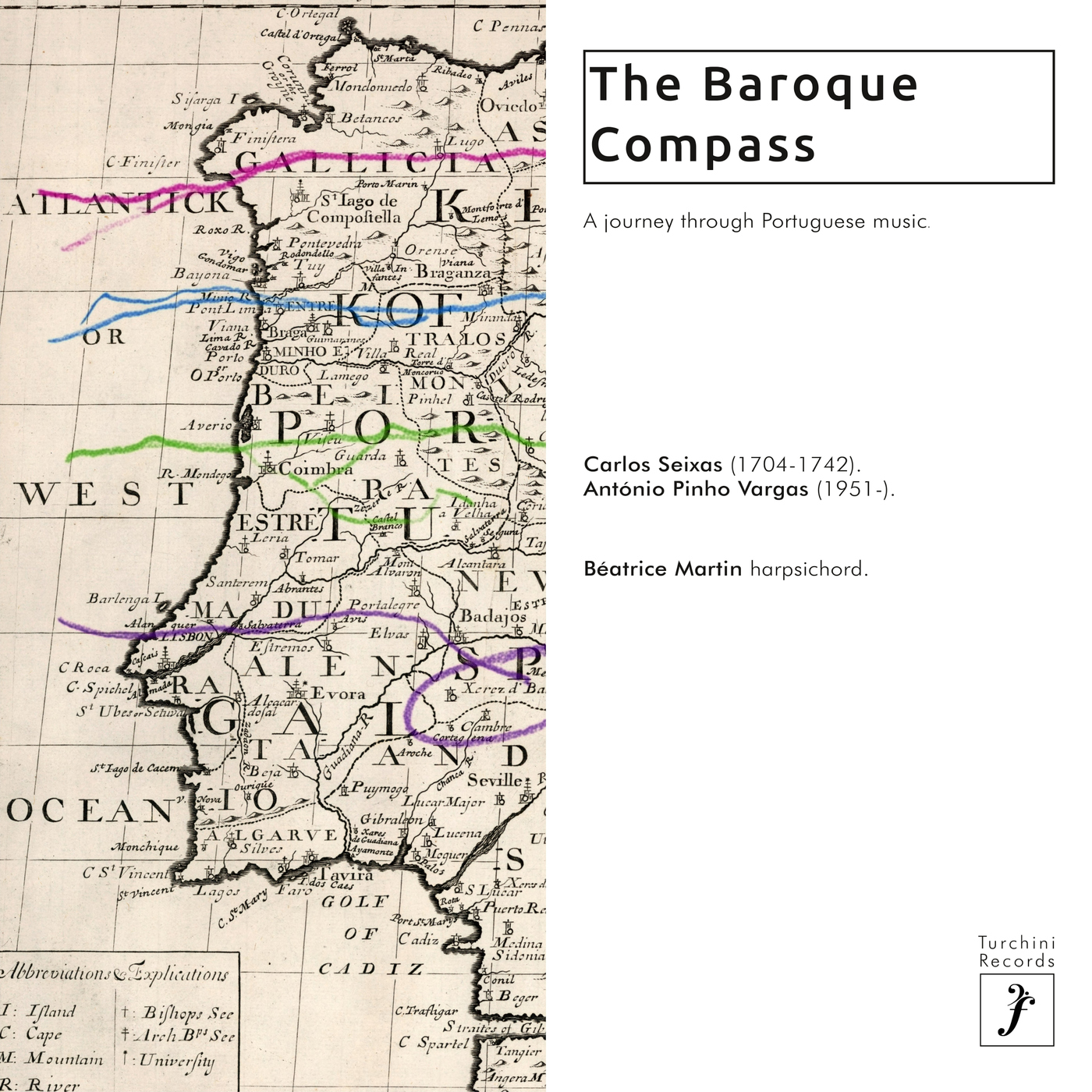

Description
At the beginning of the eighteenth century, Lisbon, though one of the most populous capitals in Europe, remained remote from the cosmopolitan life of its counterparts. During the reign of John V (1706–1750), however, the Portuguese capital was gradually transformed into a modern metropolis.
Domenico Scarlatti (1685–1757) arrived in Lisbon as music master to the royal family and, at his first performance, sang to the harpsichord accompaniment of the queen herself, Archduchess Maria Anna of Austria.
Among the many musicians, nearly all of them foreigners, who flocked to the court in search of opportunity, one stood out: the young national prodigy José António Carlos de Seixas (1704–1742). A native of Coimbra, he succeeded his father as cathedral organist at a very early age. His exceptional gifts were confirmed by the “great Escarlate” who, on hearing him play, “recognised the giant from a single touch.”
Equally singular, and rich in manifold influences, both musical and literary, is António Pinho Vargas’s (b. 1951) harpsichord piece Il Ritorno. Here the composer avoids direct quotation of the Baroque style, instead reworking some of its commonplaces and reinventing them.
Tracklist
Carlos Seixas (1704-1742)
Sonata 6-6 & App.6-3 in D Minor
Sonata 19-5 in A Major
Sonata 20-7 in A Minor
Sonata 6-3 in D Minor
Sonata 16-2 in G Minor
Sonata 19-3 in A Major
Sonata App.6-2 in D Minor
António Pinho Vargas (1951-)
Il ritorno


Reviews
There are no reviews yet.